The SWAC basketball season may have ended on the court, but the sideline game of musical chairs has just begun.
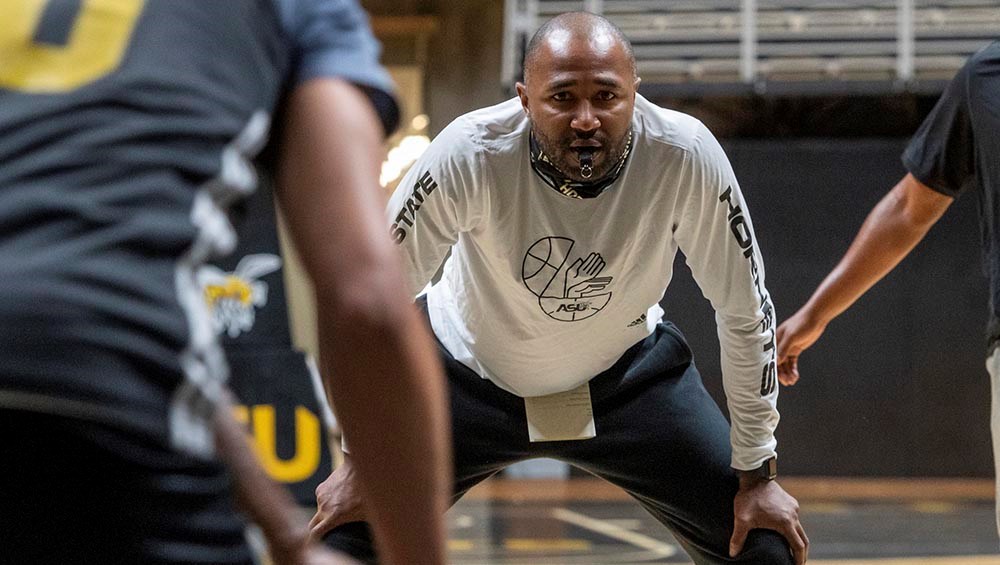
With Tony Madlock resigning from Alabama State, Mo Williams leaving Jackson State, and now Johnny Jones departing Texas Southern, three prime head coaching positions are available on the men’s basketball side.
The intrigue goes beyond just a simple opening of a Division I men’s basketball coaching opportunity, but also where these departed coaches are heading and the positions they are taking.
Williams is following his son, Mason, to Kentucky as an assistant coach, Madlock returns to Memphis to assist Penny Hardaway once again, and Jones, a member of LSU’s 1981 Final Four team and former Tigers head coach, returns to Baton Rouge alongside new (again) head coach Will Wade.
Yes, three men who were head coaches at HBCUs left to be assistants at PWIs on the Power 4 level. That is not an indictment of SWAC or HBCU basketball.
It proves that our schools are a hot commodity, even if these partnerships with name-brand coaches don’t last. It also just comes with this new territory of player and coach empowerment at the collegiate level.
Change in college basketball coaching is inevitable
The first thing we have to admit is that the days of four-year players playing for coaches who have been at a school for 20 to 25 years are effectively over. That is not just an HBCU reality; it is everyone’s reality.
North Carolina fired Hubert Davis less than five years after he ended Mike Krzyzewski’s run at Duke in the Final Four, and the guy who just won the national championship, Michigan’s Dusty May, was in the running until this past weekend to take his place.
The sooner we realize college sports are now a transient entity, the quicker HBCUs can adjust. Part of that process is identifying young coaching talent that can improve a program quickly and leave it in good hands for the next person.
Younger coaches relate to players better because they were not that far removed from being in their players’ shoes, and they also have the energy to research and master the new era of college sports.
Older guys like Jones and Madlock probably feel better serving as assistants without the head coaching responsibility. Williams (who is actually a year younger than me, damn) likely sees a way into a Power 4 job by assisting Mark Pope and having his son play for Kentucky in the process.
Once younger coaches are installed, give them room and the resources to run a program. When you have university support, such as the case for Winston-Salem State women’s coach Tierra Terry, wonderful things can happen. When you don’t have the support (see Delaware State and Jazmone Turner), bad things often happen.
As Virginia State athletic director Tiffani-Dawn Sykes told us on our New Year’s Eve Pod-A-Thon, coaches are hired to be fired. Sometimes they get to leave on their own accord, and when they do, you can only hope they left the program in a better place than they found it.
That is why no one should lose sleep over three coaches moving on from the SWAC to the Power 4 level. The key is to build resources so the next coach can shine, and if they choose to leave, the program remains successful.
It can be done. It’s just up to HBCU administrations to see it through.