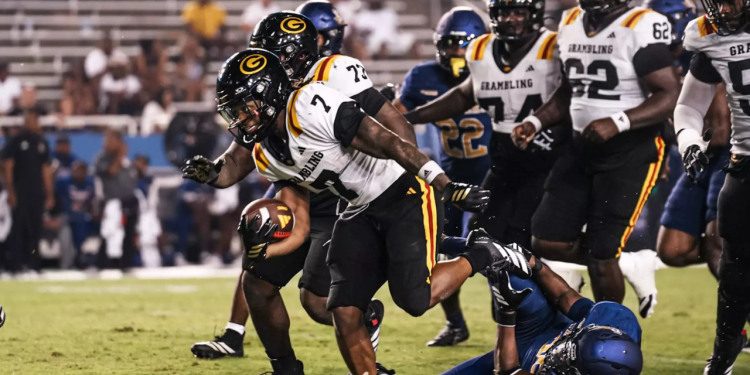
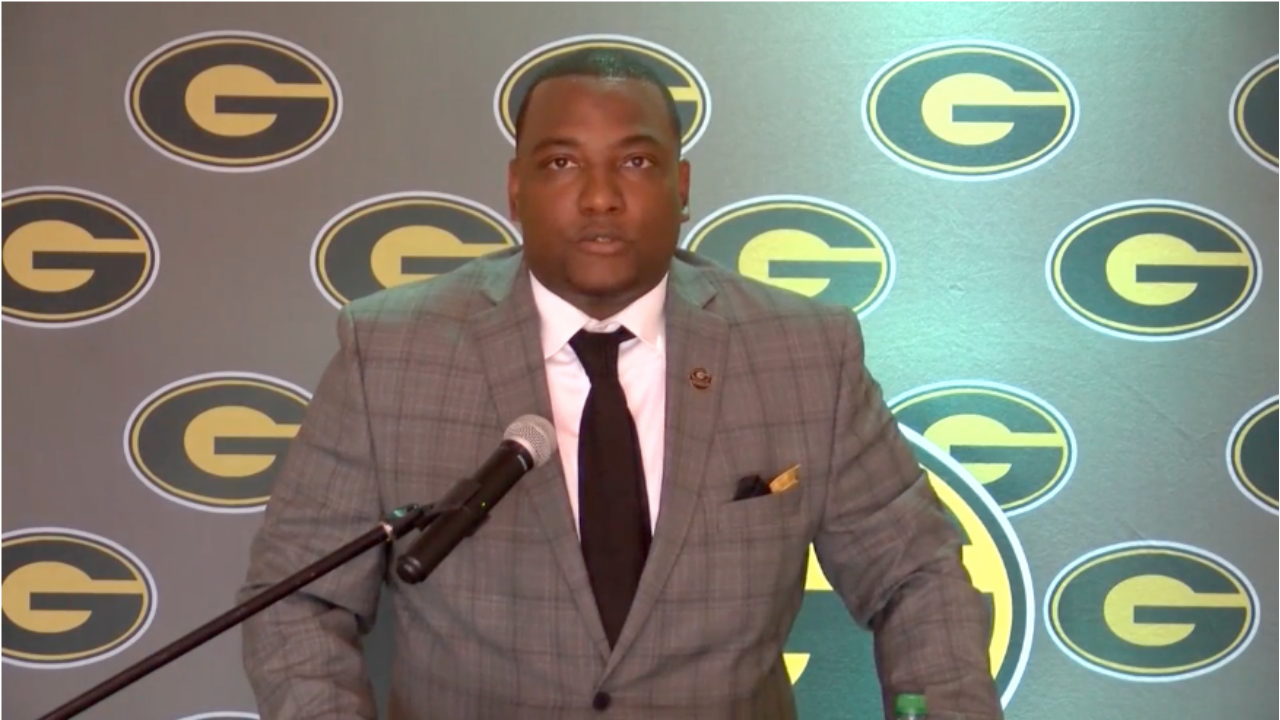
Grambling athletic director Trayvean Scott warned lawmakers Thursday that without meaningful reform, the future of college athletics could leave smaller schools and their athletes behind.
Testifying before the Senate Health, Education, Labor, and Pensions Committee, Scott said a growing imbalance in resources and influence has already reshaped the landscape of college sports.
Speaking during a hearing titled “Don’t Fumble Their Future: Positioning Student-Athletes for Success in School and Beyond,” he invoked a warning from legendary Grambling coach Eddie Robinson.
“The tail is about to wag the dog,” Scott said, quoting Robinson’s 1984 congressional testimony. “Today, that imbalance has fully materialized.”
Scott told lawmakers that power, exposure and financial resources are increasingly concentrated among a small group of institutions, leaving programs like Grambling State University struggling to remain competitive and relevant.
“We are operating in a system where competitive balance is no longer a shared expectation,” Scott said. “The challenge is no longer just winning games but maintaining relevance and sustaining opportunity.”

Drawing on his experience as a former Division I athlete at a lower-resourced school, Scott described a widening divide affecting recruiting, retention, facilities and competitive outcomes across college athletics.
At the center of his testimony was a call to preserve the educational mission of college sports. Scott said shifting policies surrounding name, image and likeness compensation, transfer rules and eligibility have created instability that disproportionately affects under-resourced programs.
He warned that extended eligibility and changing roster dynamics are reducing opportunities for incoming athletes, particularly those from underserved communities.
“Fewer scholarships. Fewer roster spots. Fewer chances,” he said.
Small schools are at a crossroads
Scott also raised concerns about the rapidly expanding NIL marketplace, arguing that the lack of consistent national regulation leaves many athletes vulnerable.
“Student-athletes are left to navigate agreements that carry real financial and legal consequences,” he explained.
Scott voiced cautious support for the proposed Student Compensation and Opportunity through Rights and Endorsements Act, describing it as a step toward establishing a national framework for NIL activity, though not a complete solution.
He urged lawmakers to go further, addressing competitive imbalance, governance instability and the need to protect academics in college sports.
“If the system becomes dominated by compensation structures, legal disputes and external pressures, education risks becoming secondary,” Scott said.
A demand for equal opportunity in era of NIL
Scott also emphasized the importance of maintaining gender equity under Title IX as NIL opportunities continue to expand.
He framed the current moment as a crossroads for college athletics, calling for deliberate action from policymakers.
“The question is whether we will shape it with intention, grounded in equity, guided by structure and anchored in education, or whether we will continue to react to it as it reshapes the system around us,” he said.
Closing his testimony, Scott reflected on his own experience and the opportunities college sports provided.
“I would not be sitting in this room today without collegiate sports opening the door for me,” he said. “And I want that door to remain open for the next generation.”