When South Carolina head coach Dawn Staley walked into the team hotel to speak with Southern University’s women’s basketball team earlier this week, she wasn’t just delivering a pep talk — she was passing on a legacy.
The Jaguars and No. 1 seed Gamecocks will tangle on Saturday in the NCAA Tournament. But the on-court meeting is bigger than basketball.
“It shows how good of a person she is,” D’Shantae Edwards said. “She knows what being at an HBCU is like. She knows what it’s like to come from the bottom and go to the top. Her words meant a lot to us as a team and to me as a person — it’s bigger than the game for her.”
Jocelyn Tate echoed that sentiment, calling the encounter not just inspiring but deeply personal.
“A lot of us look up to Dawn. We’re definitely fans of hers,” Tate said. “Having her come in and talk to us was really insightful. A lot of coaches wouldn’t take that time, and I’m just thankful we got to hear from her in person.”
For Southern head coach Carlos Funchess, bringing Staley into that room was about more than motivation — it was about giving his players access to one of the most influential figures in women’s basketball.
“I’ve never met her before, but I’ve always admired the work she does off the court,” Funchess said. “She does a great job of mentoring young women, and I thought it would be great for our players to meet her and ask questions. We’re very appreciative of her taking the time to do that.”
Pushing HBCU women’s basketball forward
Staley, whose South Carolina teams have become a powerhouse in the sport, has been vocal about uplifting HBCU programs — not out of charity, but respect. She acknowledged that while the game has grown, HBCU programs still fight for recognition that should already be theirs.
“HBCUs have sometimes been given a raw deal because they’re not Power Fours,” Staley said. “But as you’re seeing, they’re super well-coached. Southern is super well-coached. They understand what they’re doing and play a battle-tested schedule.”
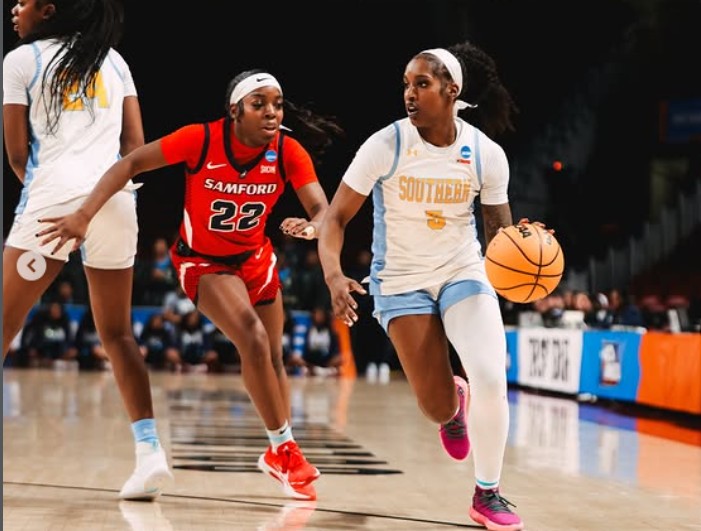
She pointed to Southern’s recent win over Samford as part of a larger trend in which HBCU programs are proving they can take on — and beat — top competition.

“It’s going to take games like that,” she said. “The more success HBCUs have in tournaments, the more they’ll be seen as legitimate contenders and not just play-in teams. They’ve just got to keep getting those eye-opening wins.”
For Staley, and for teams like Southern, it’s about persistence and visibility — not waiting for respect, but demanding it through performance. And for players like Edwards and Tate, hearing that from a coach of Staley’s stature only reinforced what they already believed: that their path, though uphill, is worth every step.